Managed Scraping APIs for High-Volume Anti-Bot Targets
Managed APIs handle fingerprint coordination that in-house tools can't maintain reliably.
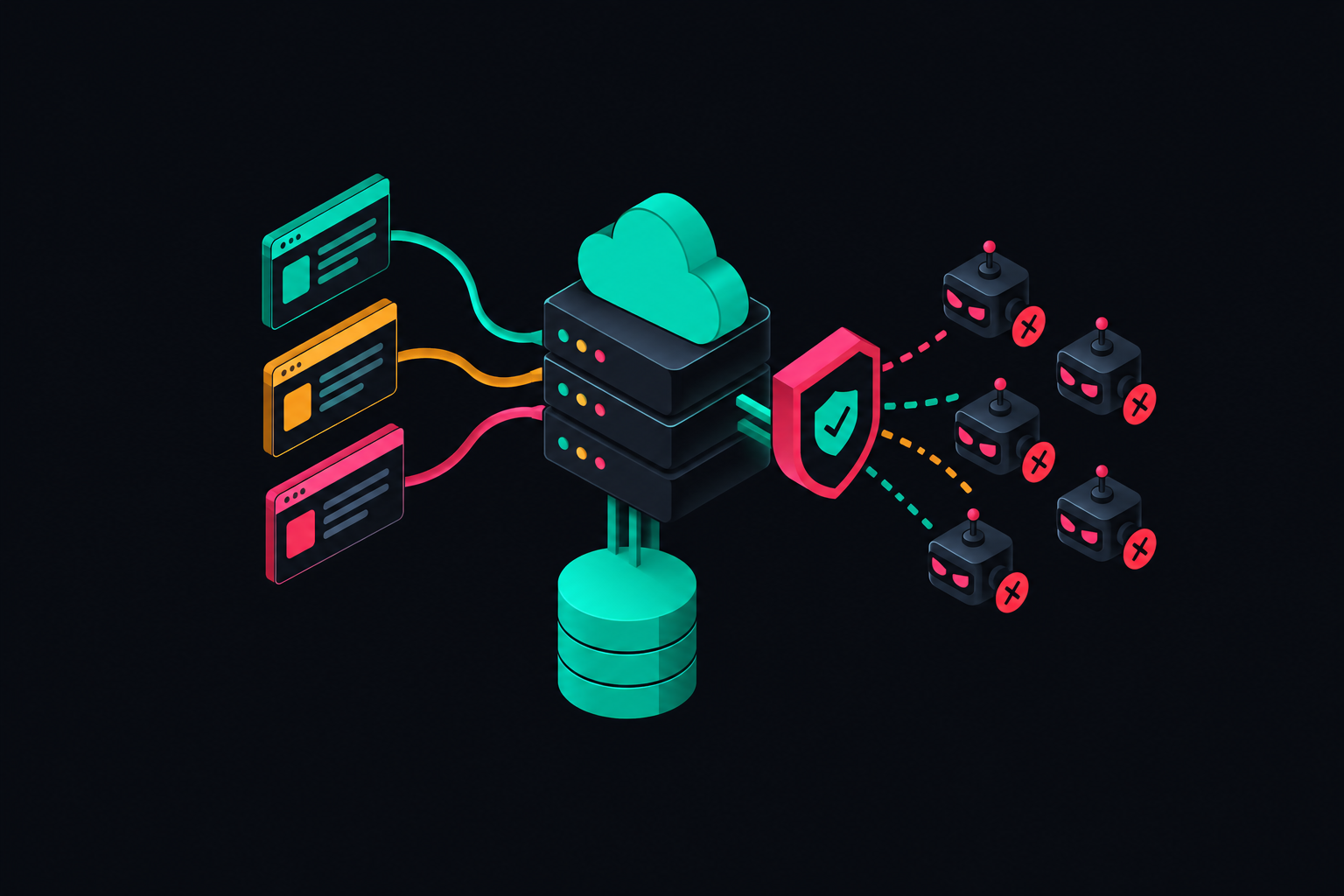
For high-volume startups blocked by anti-bot systems, a managed scraping API is the right fit when reliable access requires coordinated fingerprints, proxies, rendering, retries, and session behavior. The provider absorbs the work of maintaining an anti-bot arms race so engineers can build around complete data.
Why high-volume scraping against hardened targets is a coordination problem, not a tool problem
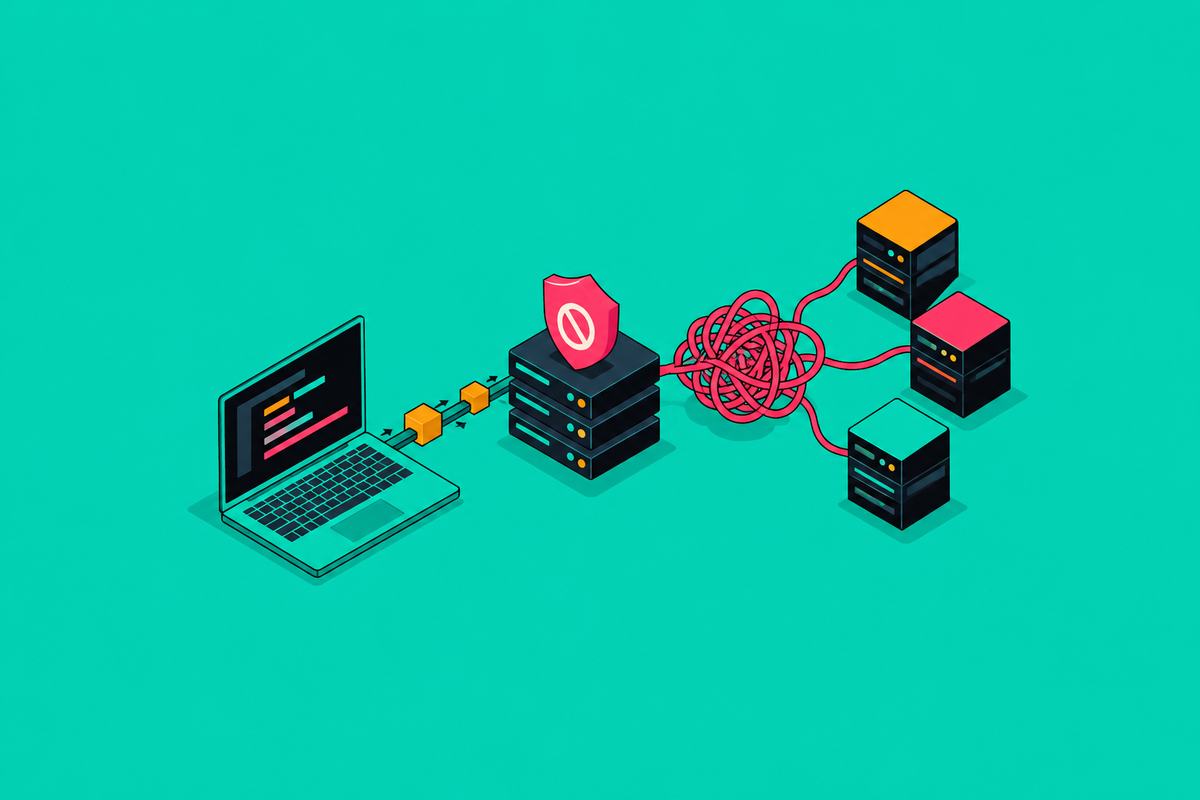
The scraper moves to residential proxies, switches to a browser automation tool, and still gets a 403 on the first request. Another tool, same locked door. The failure persists because hardened systems combine IP reputation, TLS fingerprints, browser signals, HTTP headers, JavaScript challenges, and behavior into a trust decision. Repairing one signal leaves the others available to contradict it.
A Chrome User-Agent paired with a Python TLS fingerprint makes that contradiction visible before a page loads. The session claims to be one client while introducing itself as another. Yet not every failed scrape is a fingerprint problem. A reputation block can produce a 403, missing rendering can leave an empty JavaScript shell, and lost session state can break a workflow after the third click. These are different faults, even if the application reports all of them as “no data.”
Diagnosis therefore requires identifying which signals must agree for this target and workflow. That shifts diagnosis from swapping parts to coordinating the whole request. A better proxy cannot execute JavaScript, and a browser cannot make a flagged network address trustworthy.
The six major anti-bot vendors and what each layer actually checks
Vendor identity narrows that diagnosis before any bypass attempt. For authorized collection, a plain requests.get() with a browser User-Agent often exposes identifying headers and cookies before the challenge runs. Those clues establish the presence of protection. Reading them together with the status code avoids confusing “protected by” with “blocked by.”
Cloudflare exposes CF-RAY and a server header with the value cloudflare, and uses cf_clearance and __cf_bm cookies. Its defenses combine TLS and HTTP/2 fingerprints, browser checks, JavaScript challenges, behavior, Turnstile, and a continuously retraining ML bot score. DataDome instead exposes X-DataDome-* headers, a datadome cookie, and tags.js. Its headers appear on allowed and blocked responses alike, so the HTTP status and x-dd-b also inform diagnosis. DataDome’s product page describes multi-layered AI detection using behavioral analysis, device fingerprinting, and client- and server-side signals.
Akamai’s akamai-grn header also appears on both allowed and denied responses, but a block page has a separate Reference # string. Its _abck cookie encodes behavior telemetry validated server-side, and its identifying scripts include akamai-bm-telemetry. PerimeterX / HUMAN block pages carry HUMAN Security branding, and their _px3, _pxvid, and _pxhd cookies and px.js or d.js scripts offer more clues. Incapsula, AWS WAF, and F5/Shape have their own markers, including incap_ses_*, aws-waf-token, and TS*-prefixed cookies respectively.
The three signal layers every scraper must get right simultaneously
The first layer is network reputation and request rate. Datacenter IPs are cheap but easy to flag, while residential IPs assigned by ISPs to home networks generally receive higher trust. Reputation can extend across an ASN, the network operator owning an address block. Timing adds another check. Too many requests from one address in a short time can trigger rate limits even when the rest of the client looks right.
The second layer tests the client’s identity. A TLS handshake produces a JA3 or JA4 hash from cipher suites, extensions, and their order, while HTTP/2 SETTINGS values and frame order provide another fingerprint. JavaScript checks reach further into canvas, WebGL, audio, navigator.webdriver, and Chrome DevTools Protocol activity such as Runtime.enable calls. Each signal can look plausible in isolation. Together, however, they must describe the same browser throughout the session, rather than disagree about details such as the operating system.
The third layer examines behavior and history. Timing that is always even, odd scroll patterns, and visits straight to deep URLs without referrers or any browsing first can signal automation. Honeypot links and hidden fields catch clients that parse without rendering. CAPTCHAs and JavaScript challenges often follow an already-low trust score established earlier in the inspection. Passing individual checks is not enough when their combined story sounds like a browser wearing three different passports.
Why building an in-house bypass stack is a maintenance commitment, not a one-time engineering task
The first working version makes an in-house stack look deceptively manageable. Maintenance keeps arriving. Honest headers and clean proxies may handle lightly defended sites, while TLS impersonation, fortified browsers, and full automation add progressively more moving parts. Each added part depends on how the target detects clients today.
Kasada makes that dependency especially clear. Its anti-deobfuscation protections and per-site challenge rotation can break emulator- or solver-based approaches within days of an update. Browser automation survives longer but still requires upkeep, making self-hosted Kasada bypass unsuitable for production use. Across a broader target set, the burden multiplies because an approach that clears PerimeterX does not automatically clear Akamai.
Proxy spending adds an operational cost before engineering time enters the calculation. Datacenter addresses cost less but are easier to detect, while residential traffic costs more because it has a stronger reputation. At production volume, proxy bandwidth alone can cost more than a managed API’s per-request fee. The comparison is therefore not simply software ownership versus subscription. It includes the recurring work of keeping successful access successful.
What scraping API can handle Cloudflare-protected sites at scale?
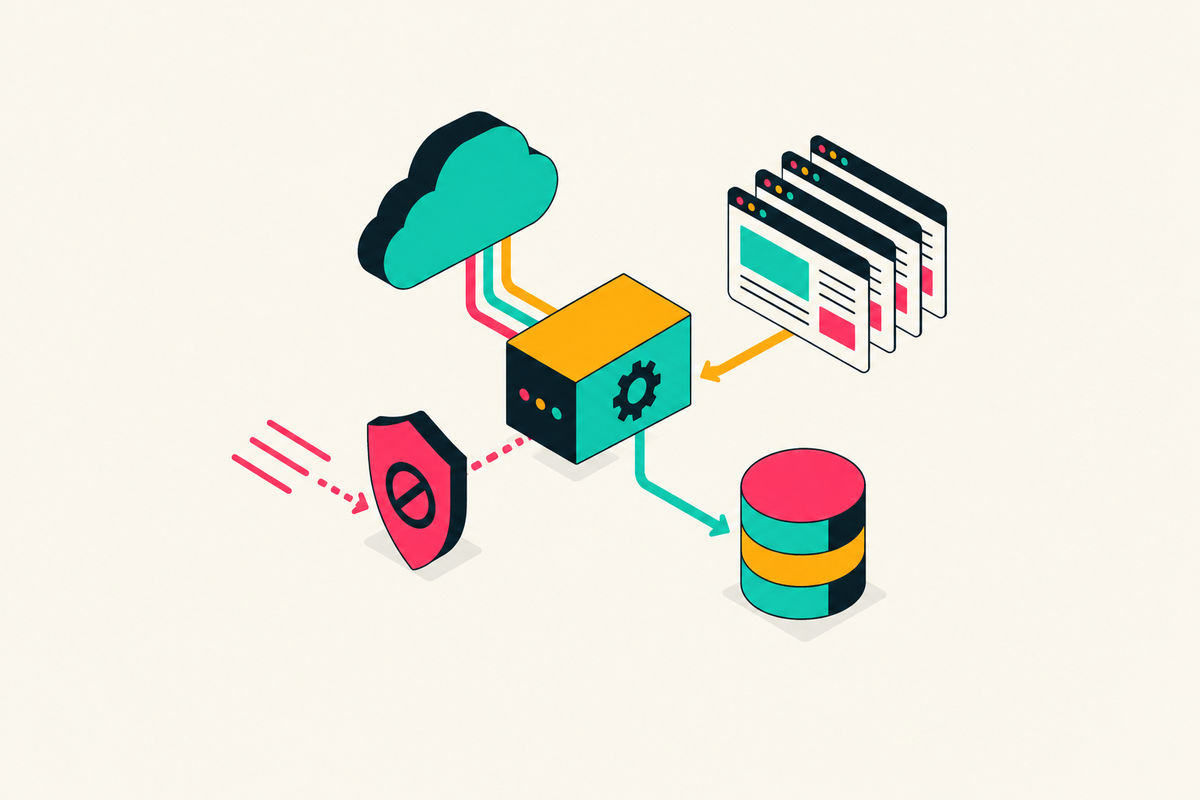
A managed scraping API addresses that recurring work by coordinating the access stack behind one request. A protection flag such as unblocker=true can trigger engine and strategy selection for the target without vendor-specific logic in application code. The client asks for content. The provider makes sure the browser profile, TLS fingerprint, proxy choice, and execution environment agree so it can retrieve the content.
That agreement continues through the session. Proxy routing can use residential, mobile, or datacenter pools, with rotation or sticky sessions matched to the workflow. JavaScript rendering exposes content that a static fetch misses, while behavioral handling coordinates navigation history, referrer chains, and timing variance. Stateful flows also need cookies, login state, or localStorage preserved across reconnects. A retry must preserve that context across attempts.
The response can then be clean HTML, Markdown, or JSON, avoiding challenge pages and partial renders. With a success-credit model, failed attempts are retried without using a success credit. Failures still need evidence. Per-request headers, cookies, rendered HTML, and HAR waterfalls let teams inspect what went wrong without operating and instrumenting their own browser fleet. Those capabilities make a provider useful at scale, though Cloudflare can still block requests.
Matching the tool to the actual failure, not the hardest possible target
The practical selection rule is to use the lightest layer that returns complete data. Three questions establish the starting point. How strong is the target’s protection, which failure is actually occurring, and how much maintenance can the team own? Buying every remedy at once is an expensive way to postpone diagnosis.
Plain HTTP fetching is the first rung when the response already contains the required data without JavaScript. If TLS or JA3 mismatch is the specific fault, curl-cffi can add a browser-matching handshake without a full browser. A rendering or scraping API is the next step when getting access calls for JavaScript execution, proxy routing, retries, or response-level protection handling. Stateful browser automation, such as a managed Cloud Browser, fits workflows requiring clicks, forms, login state, reconnect continuity, or session replay.
Local tools including Camoufox, SeleniumBase UC Mode, and nodriver offer another trade-off for teams that need low-level control. That control comes with ownership of proxies, browser updates, state, capacity, and diagnosis. Managed APIs fit medium-to-hard targets when engineering time outweighs the request fee, or failed traffic and proxy bandwidth exceed the API price. The choice follows the workload. There is little virtue in bringing a browser fleet to a page that plain HTTP already retrieves.
How AI pipelines raise the stakes for data quality at the access layer
A challenge page, empty shell, or stale cached response gives the model the wrong material to reason from. Prompt engineering cannot supply the missing source. Models with training cutoffs depend on external retrieval for recent events and newly published content, so access reliability directly shapes how well their answers are grounded.
Rendering and output format solve different parts of that problem. Requests retrieves initial HTML, and BeautifulSoup can parse it, but that combination does not execute the JavaScript needed to expose dynamically rendered content. Once the content is available, Markdown gives agents a more token-efficient input than raw HTML packed with navigation, boilerplate, and scripts. Clean formatting cannot rescue an empty page. Complete retrieval must come first.
Agents also reproduce behavioral patterns that defenses recognize. Going directly to a deep content URL without session history can trigger the same checks that block other automated clients. MCP-based workflows make reliable access more urgent because retrieval happens inside the reasoning loop as well as in separate jobs that get polled later. A managed, MCP-exposed scraping API can handle JavaScript rendering or anti-bot protection when a built-in HTTP fetch runs into it.
Benchmarked success rates across the major anti-bot vendors
Success rates across vendors show how well a managed API works, but the benchmark results here have no numbers. That prevents a defensible percentage comparison or ranking of named providers. The benchmark description says managed access has high success rates across vendors overall, but Kasada is still the hardest target and has a lower rate. It supports a qualified case for managed access with imperfect retrieval.
Coverage breadth is as important as a strong result on one defense. Cloudflare performance alone does not establish fitness for a pipeline that also encounters DataDome, Akamai, or PerimeterX. Nor does the supplied evidence establish capacity for billions of requests per month. Those are different claims. A startup that needs that scale needs performance results for its mix of vendors, since a headline success rate may have little to do with its workload.
Billing also changes the practical comparison. When failed bypass attempts use no credits, the cost of access is tied more closely to pages that are retrieved successfully. A self-hosted stack still incurs proxy bandwidth charges on failed traffic. That difference makes managed pricing more appealing when failed requests waste a lot of money, though every managed service may not be cheaper.
What to build on top once the access layer is handled
Reliable access lets the rest of the pipeline take shape around the data itself. BeautifulSoup, Cheerio, or AI extraction models can handle parsing, while Scrapy or a crawler API can handle orchestration. Storage and application logic can then be chosen on their own merits. The tools have separate jobs again. Extraction no longer needs to moonlight as a challenge-page detective.
Clean HTML or Markdown also gives structured extraction page content to work with. Templates, prompts, or auto-extraction models can turn page content into typed JSON, with AI extraction offering a route away from manual parser maintenance. Scheduled change detection, competitive intelligence, and event-triggered pipelines also work better with this clean content. Their alerts can reflect changes in the source, with noise from blocked requests filtered out.
That foundation extends to autonomous research, where an agent requests a page, synthesizes it, and chooses the next URL inside one reasoning loop. Callable access with low latency and predictable success supports that workflow, while MCP server access and webhook events connect retrieval to the surrounding system. Engineering attention moves up the stack.