The Proxy Infrastructure Trap That Wastes Engineering Sprints on Problems Scraping APIs Already Solved
Managed scraping APIs beat DIY proxies once hidden engineering costs count.
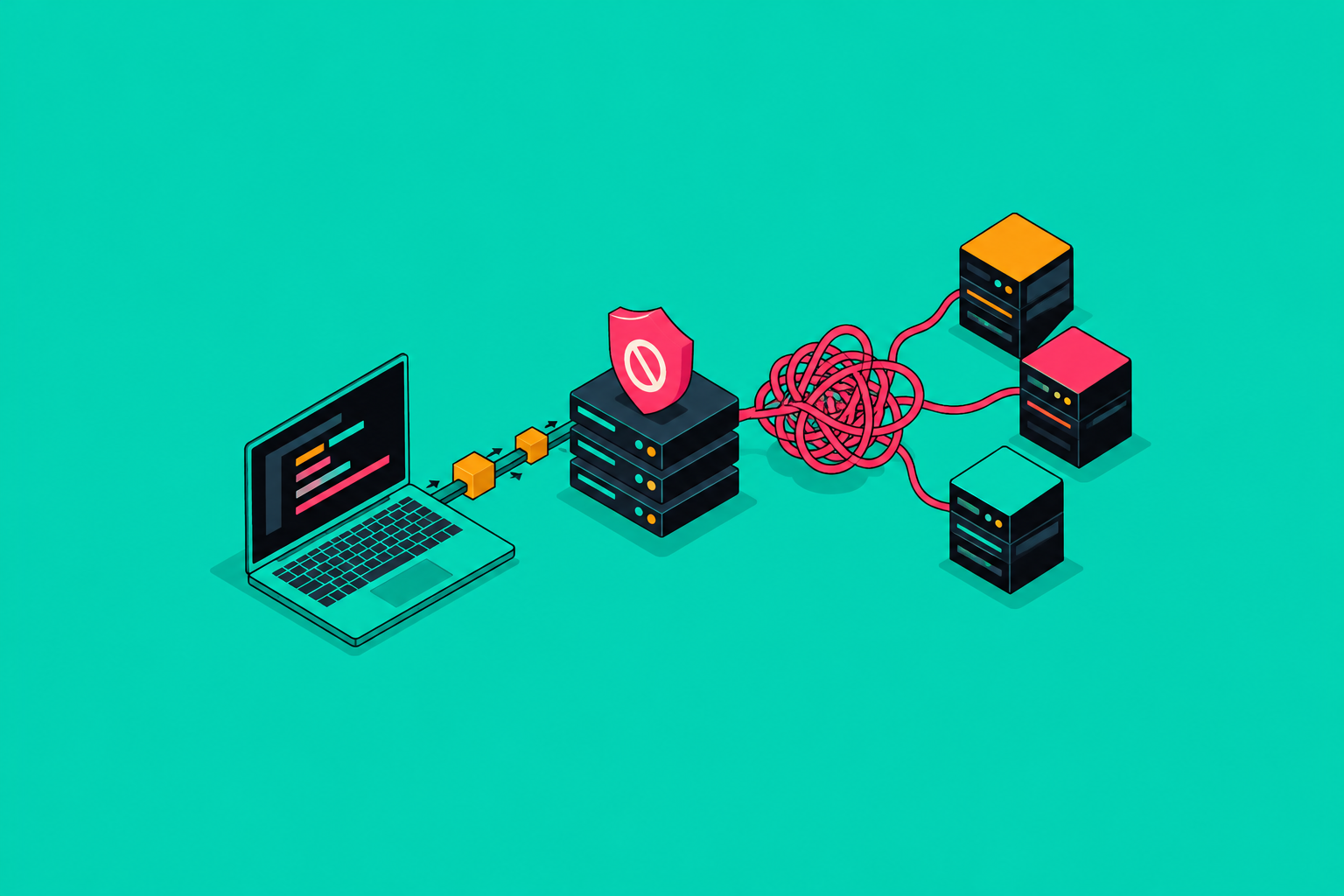
For high-volume startups blocked by anti-bot systems, a managed web scraping API is usually the stronger choice unless targets are simple and dedicated infrastructure engineers can maintain the stack. The proxy infrastructure trap is comparing bandwidth with a finished service, while visible spending represents a small share of the real bill. The deciding measure is cost per usable result, including the engineering time that never returns to product work.
Why the proxy-vs-API decision looks simple on a spreadsheet and isn't
A team opens a spreadsheet, puts proxy bandwidth prices beside an API subscription fee, and sees a clear saving. On that narrow comparison, proxies win. Both columns have real prices, so the exercise feels like a sound check. But one column prices a raw material, while the other prices a service that bundles engineering work, reliability, and anti-bot maintenance.
The omitted work still has to happen, even if nobody assigns it a cell. When it draws engineers away from core work and delays a launch by months, the cheap column starts looking less like a saving and more like an invoice sent to the product roadmap.
What the visible portion of the bill actually covers
The visible budget includes residential proxy bandwidth priced per GB, cloud hosting for scraper workers, CAPTCHA-solving fees, and any no-code tooling subscriptions. These are legitimate inputs to a cost model. They describe the services a team expects to buy and provide a baseline for estimating spend as traffic grows.
Even within that baseline, the numbers change with how hard the targets are to scrape. Residential proxies suitable for serious anti-bot defenses cost meaningfully more than datacenter proxies, which modern defenses can block quickly. The cheaper tier is therefore not a safe assumption for hard targets. The visible portion of the investment varies in share by deployment. The rest of the cost depends on what engineers have to build and keep running around those purchases.
The four cost buckets buried in the larger, hidden share
Initial build labor is the entry fee. A robust system needs proxy rotation, session management, fingerprint rotation, and retry logic before it can make reliable production requests. A scraper ready for production also needs error handling, logging, and monitoring, which take senior developers multiple weeks to build. Browser automation, dynamic adaptation, and ETL pipelines add separate engineering projects to the same build. A prototype that returns a page has not yet paid this bill.
Once the system runs, maintenance is the biggest ongoing cost. A target site's bot-detection update can stop collection at once, so engineers have to drop their planned work and find out what went wrong. Relying on a key engineer adds another weak spot, because collection can stay stopped until someone can rebuild the system or take over the role. The scraper now has a permanent seat in sprint planning, without going to a single meeting.
JavaScript rendering then multiplies the resources needed to keep collection running. Each JavaScript-heavy page adds that burden to the pipeline. The surprise often arrives after a target moves from server-rendered HTML to a client-rendered SPA. Restoring collection now requires both engineering work and a larger compute budget.
Anti-bot defenses make the final bucket a cost that stays with the system. Cloudflare, Akamai, and AWS WAF use JA4 fingerprinting among their detection signals, while modern defenses also inspect browser environments and behavior such as mouse physics and scroll timing. By 2026, JA4 has become a primary signal across major WAF providers, so a standard HTTP library can be flagged before headers or content are inspected. DataDome runs many thousands of machine learning models built for specific customers and use cases, so each protected site has its own detection challenges. IP rotation alone cannot answer that range of signals. There is no final patch after which everyone goes home.
How the opportunity cost of engineering time makes every other bucket worse
Every hour a senior developer spends debugging a 403 response or tuning fingerprint rotation is an hour they cannot spend on analysis, product development, or work for customers. The engineers capable of solving the hardest detection problems are often the same people needed for the hardest product problems. Their paid time has been committed to a different outcome.
This is how a modest build estimate can become a much larger commitment over six months. The original engineer remains responsible for maintenance, and the company's investment keeps growing even though the initial build is nominally finished. When most of the work goes into keeping collection alive, closed maintenance tickets can hide how little the product has moved forward. The team is busy, but the roadmap waits.
For a startup, a delayed roadmap can affect its fundraising trajectory as well as its release schedule. Companies training AI models or building data-driven products face a particularly direct trade-off, because the collection system competes for engineers with the work that makes the collected data valuable. AI pipeline development, model training, and competitive differentiation fall behind while the plumbing gets another repair.
Why AI pipelines and agent architectures make the hidden costs steeper
AI pipelines can fail even when the HTTP response succeeds. Raw HTML may contain the requested information, yet still be full of scripts, styles, and navigation that inflate token use and distract a model. Making it usable takes cleaning and conversion, which add engineering work and latency after collection succeeds. A page returned is not necessarily a job done.
An agent operating in a reasoning-and-acting loop has stricter timing needs than a batch job. It needs rendered content in seconds, stripped of boilerplate and sized for a context window, rather than content that can wait for a later processing run. A DIY stack built for batch collection needs additional engineering to meet that requirement.
Format consistency creates another dependency downstream. Normalized Markdown with a metadata object for every page makes chunking, embedding, and retrieval more predictable, while inconsistent extraction introduces noise that can be difficult to diagnose. Tool calls also need parameters drawn from web data to have the right types, even when those parameters look correct in a Markdown document.
This changes the architecture as well as the workload. A rigid scraping script follows instructions, while an agent observes a page and reasons about its structure. Infrastructure built around deterministic batch jobs does not automatically fit that loop. Unified APIs that combine search and fetch and return model-ready Markdown can remove separate integration and post-processing work. That reduces the number of places where a nominal scraping success can become an AI pipeline failure.
The legitimate case for DIY proxy infrastructure and where it actually holds
The strongest case for DIY is straightforward and legitimate. At very high, steady volume, a team can spread fixed engineering costs across enough requests to make self-managed infrastructure cheaper than an API. Simple static targets with light or no anti-bot protection keep maintenance manageable. Dedicated infrastructure engineers can maintain the stack without repeatedly borrowing product engineers. Under those conditions, building can be the economical choice.
The typical break-even range of around 500K to 1M requests per month is a starting estimate. Below it, API time savings generally outweigh the price premium. Above it, target difficulty and steady utilization still determine the result. A million requests against static HTML is not the same job as a million against a Cloudflare-protected target. Volume spreads fixed costs, but it does not make failed requests productive.
For most teams, the weak point is assuming these favorable conditions before measuring them. With hard targets, each successful request can end up costing more than it would through an API, even at high volume. There is also a separate strategic reason to build when extraction itself is the product's competitive differentiator. In that case, engineering effort can create proprietary capability. The distinction is between developing a core competency and rebuilding commodity infrastructure because its bandwidth looks inexpensive.
What scraping APIs have already commoditized — and what that means for the build decision
Proxy rotation and IP management are already available as managed infrastructure. An API can acquire, test, and cycle IP addresses, monitor success rates, and apply automatic fallback without the customer's team building those systems. CAPTCHA handling can be part of the same service, contract, and integration. Retry logic and smart routing can switch IPs and fingerprints after failures. These functions remain necessary, but they need not remain internal projects.
Browser automation follows the same pattern of moving work into a service. On-demand JavaScript rendering can be a request parameter instead of a headless browser farm that needs session management and resource tuning. Fingerprint maintenance can likewise sit behind the API, centralizing work on TLS, canvas, WebGL, and behavioral signals. The anti-bot contest has not disappeared. Its maintenance burden has moved away from each customer's product team.
The boundary now extends to output and integration. APIs increasingly return clean Markdown or structured JSON, removing a separate conversion layer for AI workloads. A unified API can also combine search, scraping, crawling, mapping, batching, and monitoring, with Python and Node.js SDKs, webhook events, and MCP server access. That replaces several integrations, each with its own failure modes. The setup difference can be an afternoon to obtain data through an API versus days tuning a DIY proxy setup before a reliable production request.
For teams evaluating an API for Cloudflare-protected sites or billions of monthly requests, these capabilities are evaluation criteria. No provider guarantees bypass, so a proof of concept needs to establish success rates, latency, output quality, and effective cost on the actual targets. Managed extraction is also not a substitute for a compliance-first architecture. The build decision concerns who operates the collection machinery, while permission to collect the data remains a separate question even after a successful response.
A practical audit framework for teams currently running DIY proxy infrastructure
For teams already running DIY infrastructure, the practical next step is to measure four signals rather than defend the original decision. First, check how often requests to bot-protected targets succeed. Results below the mid-to-high 90s point to bandwidth and compute spent on failures, plus engineering time spent diagnosing and retrying them. The denominator should reflect useful results. Cheap failures are still failures.
Second, pull the last three months of sprint records and count hours spent on scraper fixes, rotation updates, anti-bot patches, and DOM repairs. If that work takes more than a small share of engineering capacity, its opportunity cost may exceed the subscription that would replace it. Third, measure time-to-fix after target changes. Repeated interruptions lasting more than a few hours reveal a maintenance burden absent from the original estimate. Together, these measures expose both the labor consumed and the periods when collection is unavailable.
Fourth, measure time spent cleaning, normalizing, and converting HTML for AI pipelines. An API that natively returns the required Markdown or structured JSON can eliminate that conversion work, though output suitability still needs testing. Multiply engineering hours diverted from product work by the team's effective hourly cost to produce a monthly opportunity-cost figure. Keep that figure separate from cash spending so the comparison does not count the same work twice.
The corrected spreadsheet includes direct infrastructure spend, build and maintenance labor, failed requests, rendering, interruptions, and format conversion. Its API side should use the real pricing model, including metered pricing where it is offered. Teams that have steady hyperscale demand, simple targets, and engineers who work on the stack full time may still find that DIY wins. The audit is not about proving APIs win. It is about replacing an assumption with a measurement.