Your Scraper Keeps Getting Blocked Because Infrastructure Is the Wrong Layer to Fix First
A layer-by-layer diagnostic shows whether you need proxies or a fix.

For high-volume startups blocked by anti-bot systems, the right web scraping API decision starts with diagnosing the block. TLS, header, browser, and behavioral mismatches can defeat an otherwise sound network setup. A managed access layer fits when per-site defenses and ongoing maintenance exceed the team’s capacity, while a custom stack can remain the cheaper choice when the fault is a repairable TLS or header mismatch.
Why scrapers get blocked even when the proxy setup looks correct
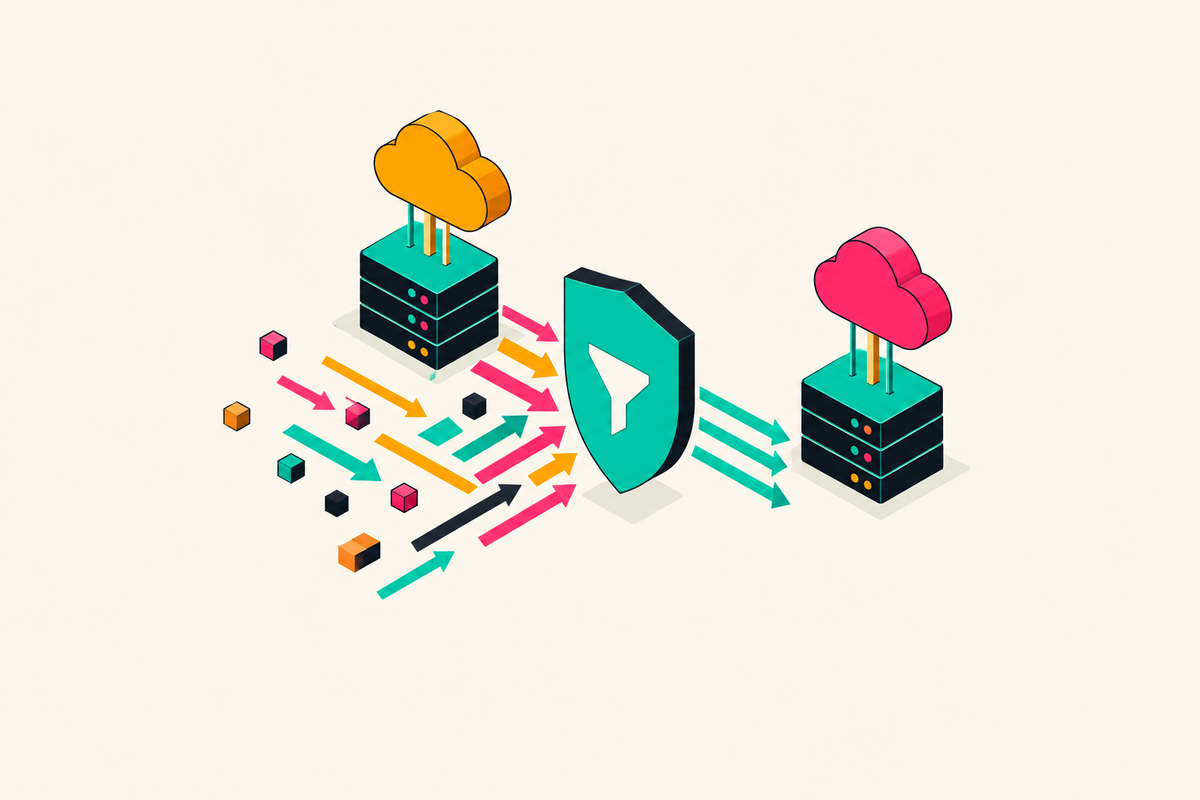
The scraper worked yesterday, today it returns 403s, and the IP looks fine. So the proxy budget gets another meeting. The instinct is understandable, but it confuses where the request travels with how the request identifies itself. Modern anti-bot systems check several layers together, so a clean network path cannot make up for a client signature that looks suspicious.
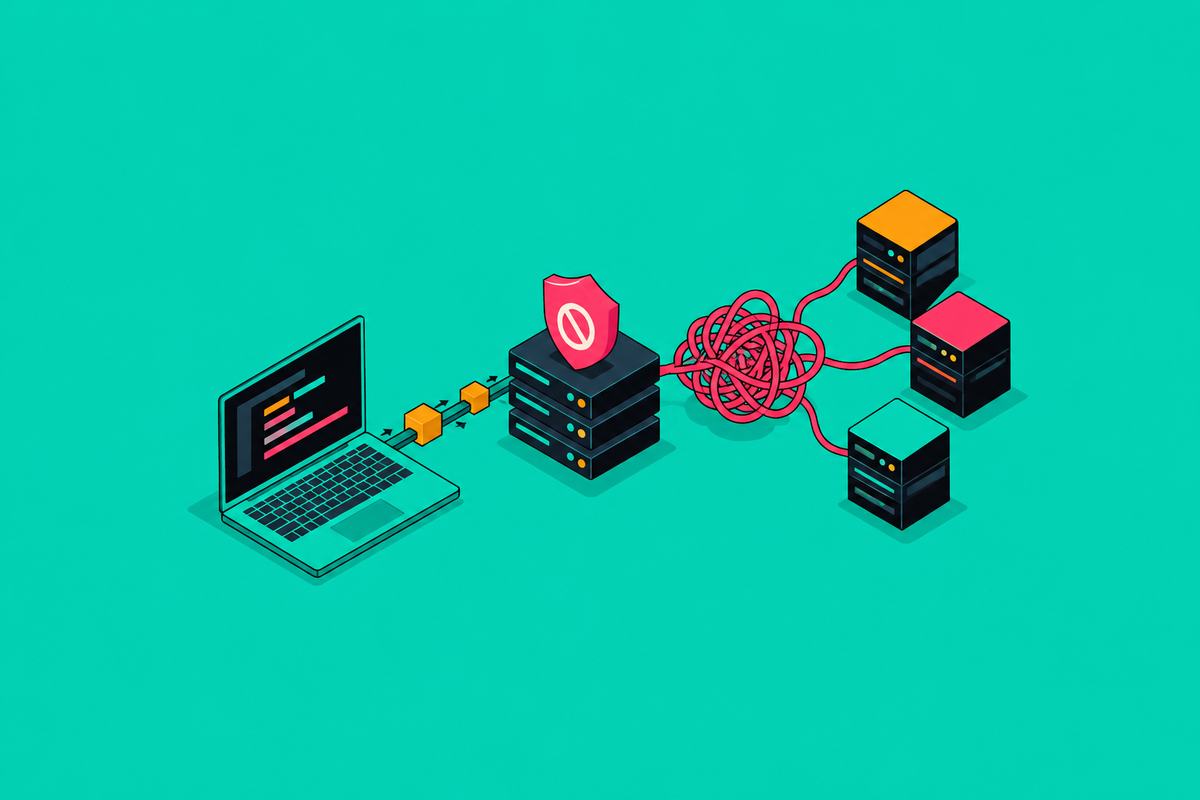
A scraper can use a residential IP and send a perfect Chrome User-Agent string but still give away its use of Python’s requests library during the TLS handshake. This is a “wrong-shape Chrome,” wearing the right name badge with the wrong face underneath. The server can block it before the headers it chose so carefully can help. Buying more proxies in that situation increases the bill while leaving the success rate unchanged.
The four detection layers anti-bot systems evaluate before a byte of HTML is returned
The first hypothesis is that the network itself looks untrustworthy. Anti-bot vendors maintain blocklists of datacenter IP ranges from major cloud providers, so an address can trigger rejection before the server reads any content. Residential proxies receive higher trust because their ASN resembles organic household traffic. But residential does not automatically mean clean. Decodo’s 2026 scraping guide notes that shared residential pools can contain previously flagged IPs, making pool size and IP freshness as important as proxy type.
The second hypothesis is a TLS fingerprint mismatch. During the handshake, the client reveals supported cipher suites, extensions, protocol versions, and elliptic curve preferences, which form a JA3 or JA4 identifier. Anti-bot systems compare these identifiers with known bot signatures. The guide describes identification of Python’s requests library JA3 value in milliseconds, regardless of the User-Agent string. A browser claim cannot rewrite the handshake that preceded it.
The third hypothesis is an inconsistent browser identity. Header coherence needs to be checked because all the HTTP headers must match the browser the scraper claims to be, beyond the one selected string. JavaScript probing then collects hundreds of environmental signals, including navigator.webdriver, canvas and WebGL signatures, AudioContext behavior, fonts, plugins, and screen resolution. Removing the obvious automation flag is not enough. Missing plugins, an absent GPU renderer, inconsistent performance timings, or a profile from an old Chrome version can still lower trust.
The fourth hypothesis is behavior that gives the session away. Concurrency, pacing, and navigation patterns can expose automation even when the lower layers look credible. On one anti-bot-protected site, issuing a request chain concurrently rather than serially roughly quadrupled the denial rate with the same proxies and fingerprint. Hidden honeypot links provide another trap because blind scrapers follow links that ordinary visitors would not. Any one of these four layers can independently produce a block.
Why 200 OK is not a confirmation of success, and other ways silent failures hide misdiagnosis
A 403 is inconvenient but clear, while a 200 response containing a challenge page records failure as success. A successful status can come with the target page, a JavaScript challenge shell, a login screen, or fake data that looks real. These are not interchangeable outcomes. Treating them all the same keeps the success dashboard looking healthy even as bad data gets into the dataset.
Shadow banning makes that measurement problem harder still. A detected fingerprint may receive structurally valid content with stale prices, missing fields, or placeholder values. The parser can accept it without complaint because the document still has the shape it expects. The green dashboard becomes a very expensive night-light. Until downstream quality checks catch the discrepancy, the team may have no visible reason to question its access setup.
Retry logic can then amplify the wrong diagnosis. A refusal is not the same as a rate-limit signal, and neither should be confused with a challenge page returned as success. Cloudflare’s September 15, 2026 policy change replaced its single “Block AI bots” toggle with separate Search, Training, and Agent controls, making deliberate policy rejection another explanation for blocked agent traffic. Retrying that rejection as though it were temporary congestion misreads the signal. Response-body validation must therefore precede a systematic diagnostic, or the investigation starts with faulty measurements.
A systematic diagnostic sequence for identifying which layer is causing the block
The first comparison checks the same target URL in a real browser and the scraper, examining both the returned content and the status. If both fail, the comparison has not established a scraper-specific detection problem. If the browser succeeds while the scraper fails, it has exposed a gap in the detection stack. Body validation stays in place throughout the sequence so that a challenge page cannot masquerade as a successful repair.
To isolate network reputation, swap proxy type once, from datacenter to residential, while keeping the other variables steady. If that change alone restores the target content, stop and fix the network layer. There is no reason to rebuild the browser environment. If the block persists, move to TLS. Previously flagged residential IPs remain a caveat, so the result shifts attention away from IP reputation without proving that every address is trustworthy.
Use a JA3/JA4 echo service to compare the scraper’s fingerprint with a real Chrome browser’s fingerprint on the same connection. A mismatch identifies a client-signature problem. The repair at this layer is a TLS impersonation library that reproduces a real browser’s cryptographic signature. Then test the target content again before moving on. An old browser profile can itself look suspicious in 2026, so impersonation profiles need to track current releases.
If TLS is coherent but the block remains, compare headers side by side with an HTTP echo service. Accept-Language, sec-ch-ua hints, and referer chains must agree with the browser being claimed. A Safari-on-macOS User-Agent paired with headers that do not follow WebKit’s formatting is independently detectable. Rotating that string will not repair the contradiction. Correct the mismatch and retest before moving to the more expensive browser-environment investigation.
For a headless browser, the next branch is a fingerprint test page. Check navigator.webdriver exposure, canvas and WebGL anomalies, and missing plugin lists. The Bamberg study from June 2026 found that header-level signals explained most of the soft-block gap between headless and headed Chromium, while deeper JavaScript probing was also used but had less effect. If the environment still differs after the headers are fixed, check those exposed browser signals.
Only after the network, TLS, headers, and browser environment are clean should behavioral tuning take priority. Compare concurrency patterns, request pacing, and navigation depth while keeping the lower layers that have already been tested the same. Serializing requests per session while parallelizing across sessions, rather than within them, addresses the concurrency fingerprint without an infrastructure change.
How the diagnostic changes when the target is protected by enterprise-tier behavioral ML
DataDome runs a large number of customer-specific and use-case-specific machine learning models tailored to different traffic patterns and threat profiles. A behavioral pattern that passes on one domain can therefore fail on another. Once detection is tuned per site, a successful repair requires ongoing maintenance after deployment.
Agent identity introduces a separate limit that should not be mislabeled as behavioral scoring. The University of Illinois Chicago benchmark, published in October 2026 as arXiv 2610.41181, tested AI clients against defenses that were in use. It found that blocks under Cloudflare’s managed AI controls varied with the User-Agent strings and signed-agent identities that clients declared. Some client identities were blocked while others passed, an access-policy distinction.
These limits do not make the lower-layer investigation wasted work. TLS and HTTP/2 checks can filter requests before behavioral models run, so fixing clear mismatches still helps even on targets that are hard to access. But when the evidence points to per-domain behavioral profiles, the choice becomes ongoing monitoring or a managed layer that maintains those profiles. Managed APIs bring their own problems, including undifferentiated error codes, vendor-specific rate limits, and behavior that is hard to debug. Understanding the layers makes a team better at evaluating those tools and building its own.
Applying the diagnostic to AI agent pipelines, where blocked requests corrupt outputs without obvious errors
A conventional scraper can store bad content, while an agent can reason over it and turn it into a confident answer. When a tool expects a price, date, or status but receives a challenge page rendered as Markdown, the pipeline may produce no obvious error. A polished answer can be the last stage of a broken fetch.
Confirm that the User-Agent, declared purpose, and forwarded headers are consistent with the target’s access policy before investigating technical mismatches. The Illinois Chicago benchmark backs the need to tell identity-based rejection apart from a fingerprint defect. Once that policy question is settled, the same tests apply in the same order. Body validation is still needed because an acceptable status code cannot tell the agent whether it can use the evidence.
Output format is a separate requirement after access succeeds. For agentic tool use, typed JSON is a better fit than Markdown when function parameters require a price, date, or status field. Markdown leaves the agent extracting typed values from a text blob. Changing the format alone cannot fix poisoned source content, though.
Deciding when to maintain a custom diagnostic stack versus moving to a managed access layer
For a high-volume startup, the useful buying question is which repair and maintenance burden a managed web scraping API would actually remove. Request volume alone does not answer it. A TLS mismatch can be cheap to fix at the library level even when it causes many failures, while the work of keeping per-site behavior up to date grows with the number of targets. The diagnostic supplies the distinction. It also prevents a move straight to premium proxy rotation or full browser automation when a cheaper correction would have worked.
A custom stack is worth maintaining when the fault lies in TLS or headers, or when low-to-medium-security targets become accessible without behavioral tuning. In those cases, a library swap or coherent headers can resolve the identified problem without adding managed infrastructure. Maintenance capacity is the other condition. The team must be able to monitor fingerprint staleness continuously, because detection scripts update on the same cycle that makes an older audit unreliable.
A managed access layer fits when the diagnostic points to per-site behavioral ML and the team cannot keep up with the work of maintaining profiles. It also fits agent pipelines whose silent failures corrupt outputs when continuous fingerprint monitoring is too much to sustain. At high volume, structured error codes and built-in retry logic become concrete selection criteria because undifferentiated retries can turn one fault into escalating spend. Output support is another criterion. Typed JSON or clean Markdown can remove downstream parsing work when the format matches the pipeline’s use.
The notes provide no basis for naming a best API for billions of requests per month or guaranteeing that Cloudflare-protected sites will never block it. The defensible comparison is between a custom stack with a known, affordable repair and a managed layer that takes on an identified recurring burden. Diagnosis makes the infrastructure decision cheaper and harder to get wrong.